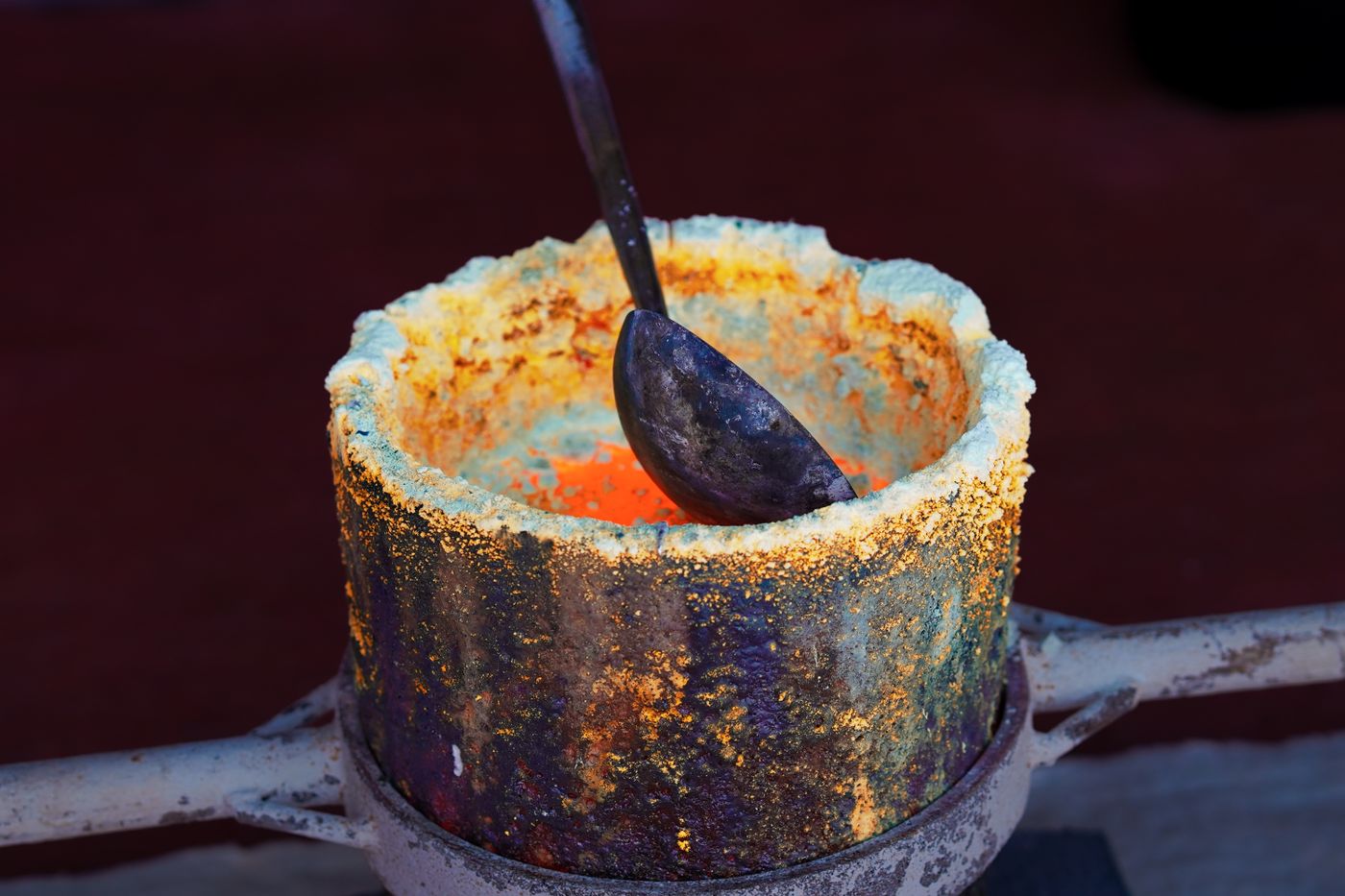
SAND CASTING
Freedom of shape, starting from a single piece
In sand casting, molten aluminum is poured into a mold made of sand. No metal die is needed, so initial costs stay low, and large parts or complex hollow shapes with cores are possible.
In addition to wooden patterns, we use 3D-printed sand molds and can deliver prototypes in as little as two weeks from drawing.
FEATURES
Key Features
-
01
Low tooling cost
Pattern costs are a fraction of a metal die — ideal for prototypes and low-volume service parts.
-
02
Large parts up to 1.5 m
No-bake molds in large flasks handle equipment frames, bases and other large castings.
-
03
Fast turnaround with printed molds
Molds are printed directly from CAD data without patterns, so design changes are reflected immediately.
SPECIFICATIONS
Capabilities
| Alloys | AC2B / AC4B / AC4C / AC4CH / AC7A, etc. |
|---|---|
| Part size | Up to 1,500 × 1,200 × 800 mm |
| Part weight | 0.5 – 300 kg |
| Lot size | 1 – 500 pcs / month |
| Tolerance | Equivalent to JIS B 0403 CT8 – CT10 |
| Heat treatment | T5 / T6 / T7 (in-house) |
| Prototype lead time | From 2 weeks (with 3D-printed molds) |
PROCESS
Production Process
- 01
Casting design & CAE
We plan gates and risers and check defect risks with filling and solidification analysis.
- 02
Molding
Sand molds and cores are made with wooden patterns or a 3D printer.
- 03
Melting
Aluminum alloy is melted in crucible furnaces and its composition verified by spectrometry.
- 04
Pouring
Skilled craftsmen pour the melt into molds under strict temperature control.
- 05
Shakeout & finishing
Sand is removed, gates and risers are cut, and burrs are finished.
- 06
Heat treatment & inspection
After T6 treatment, parts are inspected by X-ray and 3D scanning before shipment.
PRODUCTS
Product Examples
Frame for semiconductor equipment
Bracket for machine tools
Valve body for hydraulic pumps
Cover for vacuum chambers
* Product photos will be replaced after the photo shoot (illustrations are used in this demo).